
← Health journal Oncology

CIMAvax-EGF and Vaxira: What Patients Should Know

What these Cuban therapeutic cancer vaccines are, where the clinical evidence remains limited, and why an oncology file review comes first.

Medical disclaimer: This page is for information and international coordination only. It does not diagnose, prescribe, guarantee suitability or replace urgent or ongoing oncology care.
Evidence at a glance

What the current research shows.

In the published CIMAvax-EGF phase III trial, the primary overall-survival comparison was not statistically significant in the intention-to-treat analysis, while a per-protocol analysis showed a signal. It has been licensed in Cuba for this indication since 2008, and further trials — including combination studies in the United States — are ongoing. Published Vaxira evidence also remains limited and should be interpreted by an oncologist in context.

Understanding the vaccines

What CimaVax-EGF and Vaxira are

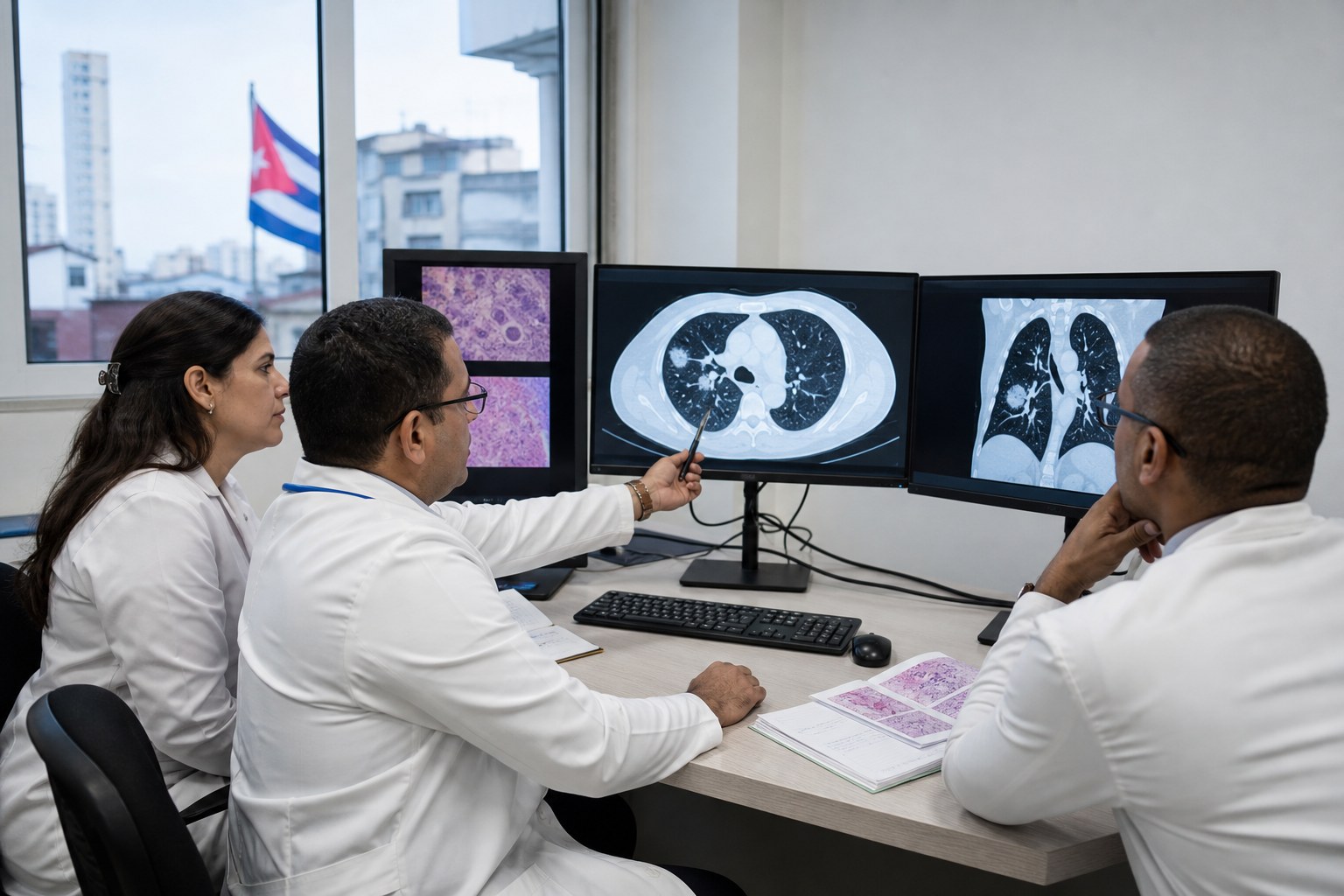
CimaVax-EGF and Vaxira (racotumomab) are therapeutic vaccines developed by Cuban biotechnology institutes and used within Cuba's oncology system as a form of immunotherapy. They are not chemotherapy and not a cure; instead, they are designed to engage a patient's own immune system against specific molecular targets associated with tumor activity. Reviewing physicians consider them only for a defined group of patients with advanced non-small cell lung cancer (NSCLC) who have already completed initial standard treatment and whose disease is otherwise being actively managed by an oncology team. Every case is different, and appearing in this article is not an offer of treatment or a statement of expected outcome. Because these are specialized immunologic therapies rather than universally applicable treatments, this overview is deliberately general; what applies to a specific patient is determined only after a physician has reviewed that patient's actual oncology records.

01

CimaVax-EGF

CimaVax-EGF is designed to reduce circulating levels of epidermal growth factor (EGF), a protein that can bind receptors on some tumor cells and support their growth. By lowering available EGF, the vaccine is intended to reduce that growth signal over time rather than act as an immediate treatment. It is generally discussed as part of ongoing disease management for eligible patients, not as a stand-alone intervention.
02

Vaxira (racotumomab)

Vaxira targets NeuGcGM3, a ganglioside molecule that appears on the surface of some tumor cells but is largely absent from healthy tissue. It is intended to direct an immune response toward cells expressing this marker, working alongside the immune system rather than acting as a direct cell-killing agent. As with CimaVax-EGF, suitability depends on the individual case.

03

How the vaccines are given

Both vaccines are administered as a series of injections, typically starting with a more frequent induction schedule and then continuing with ongoing maintenance doses. The exact schedule, dosing, and duration are set and adjusted by the treating oncology team based on how the patient tolerates treatment. Response and tolerance are monitored throughout, and the schedule may be revised over time.

04

Immunotherapy, not chemotherapy

These vaccines sit in a different treatment category from chemotherapy or radiotherapy. Rather than directly attacking dividing cells, they aim to modify how the immune system engages with tumor-related targets. This is why they are evaluated as a possible addition to a patient's broader care plan, not as a substitute for standard oncology treatment. Patients often tolerate immunotherapy differently than chemotherapy, which is one of several factors a reviewing physician weighs when discussing options.

05

Maintenance therapy, not first-line treatment

CimaVax-EGF and Vaxira are used after a patient has already completed initial chemotherapy and/or radiotherapy for advanced NSCLC. They are not offered as an initial treatment and are not a stand-alone alternative to standard oncology care. A reviewing physician will always expect to see a documented history of prior treatment before considering either vaccine.

06

A candidacy decision, not a guarantee

Whether either vaccine may reasonably be considered depends on tumor type, stage, biomarker status where available, and how the disease responded to prior treatment. A reviewing physician makes this determination individually, case by case, using the submitted oncology file. Not every applicant will be found to be a candidate, and that outcome is itself a meaningful part of the review.

CIMAvax-EGF and Vaxira: What Patients Should Know
OncologyCIMAvax-EGF and Vaxira: What Patients Should Know

What these Cuban therapeutic cancer vaccines are, where the clinical evidence remains limited, and why an oncology file review comes first.

Before any recommendation

What the oncology file review requires

A Cuban oncology specialist reviews a documented medical file before any statement about eligibility is made. This review is physician-led and is meant to determine, case by case, whether maintenance immunotherapy is reasonable to discuss alongside a patient's existing treatment plan. The items below are typically requested so that review can be done responsibly and without unnecessary delay. Submitting a complete file up front generally leads to a clearer and faster answer than a partial one, since a physician cannot assess candidacy from limited information.

01

Pathology report

Histological confirmation of non-small cell lung cancer is required, including the original biopsy findings or the most recent pathology report available from the treating institution. Without this documentation, a reviewing physician cannot confirm the tumor type under discussion.

02

Staging documentation

Records confirming the stage of disease are required, since these vaccines are considered only in advanced-stage NSCLC and not for earlier, potentially curable presentations. Staging also helps the reviewing physician understand what other treatment options may still be relevant.

03

EGFR and biomarker status

Results of EGFR testing or other relevant biomarker studies, where these have already been performed, help the reviewing physician assess whether either vaccine is worth discussing further. If biomarker testing has not been done, that can simply be noted as part of the file, and the reviewing physician will indicate whether further testing is needed before a decision can be reached.

04

Prior chemotherapy and radiotherapy history

A summary of treatments already received, including specific regimens, approximate dates, and how the disease responded, helps the reviewing physician understand what has already been tried. This history is one of the most important parts of the file.

05

Current performance status

A description of the patient's current ability to carry out daily activities gives the reviewing physician a sense of overall condition, since this factors into whether maintenance immunotherapy is reasonable to consider. This is often summarized by the referring or treating physician using a standard performance-status scale, and it is reassessed if there is a significant change before travel.

06

Current imaging

Recent scans, such as CT imaging, showing the present state of disease allow the review to be based on an up-to-date picture rather than older records alone. Imaging that is several months old may need to be repeated before a decision is made.

How coordination works

From file submission to a physician's decision

The process starts with an oncology file review, not a booking. Coordination only moves forward if a reviewing physician determines that maintenance immunotherapy is reasonable to consider for that specific patient, based on the documented medical history submitted. Nothing about starting this process commits a patient to travel or treatment. Every step is designed to keep the patient's treating oncology team informed, not to work around them.

01

Submit the oncology file

Pathology, staging, prior treatment history, biomarker results if available, and current imaging are collected and organized into a single file for physician review. Our coordination team can help gather and translate records where needed, but the clinical review itself is performed by the treating physician.

02

Independent physician review

An oncology specialist reviews the file and determines whether CimaVax-EGF or Vaxira may reasonably be considered as part of ongoing disease management, or flags that neither is appropriate for that case. This assessment is documented and shared back as part of the response, along with the reasoning behind it, whether the outcome is favorable or not.

03

Coordination if candidacy is confirmed

If a reviewing physician confirms eligibility, Cuba Health Assist coordinates travel, appointments, and logistics around that decision. If the physician does not confirm eligibility, the patient continues under their existing oncology care at home, and that outcome is communicated clearly and directly.

Mechanism and administration

How CIMAvax-EGF and Vaxira work

Neither product is chemotherapy in the classical sense. Both are described as therapeutic vaccines that aim to direct the immune system at a target. CIMAvax-EGF aims to make the body produce antibodies against its own epidermal growth factor (EGF), lowering circulating EGF and reducing stimulation of tumour cells that depend on that signal. Vaxira (racotumomab) follows a different route, aiming to generate an immune response against NeuGcGM3, a structure that can be present on tumour cell surfaces.

Administration is usually by intramuscular injection. A typical schedule involves several induction doses followed by monthly maintenance, continuing for months as long as clinical benefit persists and the patient tolerates it. This is therefore a programme requiring regular follow-up, not a single procedure. Where and how the long-term maintenance will be continued is the most important item to settle before any travel decision.

These treatments were not designed to replace first-line chemotherapy. Published studies examined them mainly as maintenance in advanced non-small cell lung cancer, in patients who had completed first-line treatment and whose disease was controlled to a degree. Performance status, response to previous treatment and organ function are the main criteria for suitability.

The level of evidence should be stated honestly. In the published phase III trial of CIMAvax-EGF, the overall-survival difference did not reach statistical significance in the intention-to-treat analysis, while a per-protocol analysis reported a signal. Critical reviews concluded the evidence was insufficient for routine international standard-of-care use. Further research, including combination studies in the United States, is ongoing, and published data for Vaxira are also limited. This does not mean the option cannot be discussed, but it does require expectations to be set realistically.

Eligibility and limits

Where these treatments may not be suitable

Suitability is determined only by an oncologist, working from the complete file. The following are the limits most often encountered.

01

Unconfirmed diagnosis or stage

Without a pathology report, staging imaging and, where possible, a molecular profile, no assessment can be made. An incomplete file is the most common cause of misdirection.

02

A targeted option has been skipped

Where a driver alteration such as EGFR, ALK or ROS1 is present, or PD-L1 is high, those targeted options are assessed first and this vaccine is considered afterwards.

03

Low performance status

In patients unable to manage daily activities or largely confined to bed, a long vaccine programme and international travel are usually inappropriate; supportive and symptom care take priority.

04

Uncontrolled comorbidity

Active infection, serious autoimmune disease or uncontrolled cardiac or respiratory failure affect both treatment and travel safety.

Frequently asked questions

Common questions about CIMAvax-EGF and Vaxira

Do these vaccines cure cancer?

No; these products are not presented as a cure. In published research the goal is to extend the period during which disease remains controlled and to preserve quality of life. Results vary between patients and cannot be guaranteed in advance.

Do they replace chemotherapy?

No. The pattern studied is maintenance after first-line treatment has been completed. Using them in place of standard treatment options is not supported by current evidence.

How long does treatment last, and must I stay in Cuba?

The programme is long. After induction doses, monthly maintenance follows. Where administration will continue, how the product will be supplied and who will provide local oncology follow-up must be planned in writing before travel, otherwise treatment can be left incomplete.

What are the side effects?

Reported effects are usually pain and redness at the injection site, fever, shivering, fatigue and headache. These are mostly mild to moderate, but every administration should take place under oncological supervision.

Which documents are needed?

Pathology report, staging imaging (CT/PET-CT), molecular and PD-L1 results where available, a list of treatments given with dates, current blood tests and the most recent oncology consultation note. Documents that are dated, ordered and legible shorten the review considerably.

Official product information

CIMAvax-EGF as licensed in Cuba

The data below are taken from the product summary approved by CECMED, the Cuban medicines regulator. They describe the product as licensed in Cuba and are not a treatment recommendation.

Registration
Sanitary registration B-08-063-L03, registered 12 June 2008
Manufacturer
Center of Molecular Immunology (CIM), Havana, Cuba
Approved indication
Non-small cell lung cancer in advanced stages IIIb / IV
Route and schedule
Intramuscular. Each dose is four injections (both gluteal and both deltoid regions), 1.2 mL each. Induction begins with a single dose of cyclophosphamide 200 mg/m²; three days later the vaccine is given every 14 days for the first four doses. Maintenance is monthly re-immunisation for as long as the patient's general condition allows.
Contraindications
Pregnancy and breastfeeding; history of allergy to chemically or biologically similar compounds; uncontrolled intercurrent disease including active infection, symptomatic congestive heart failure, unstable angina and cardiac arrhythmia; hypersensitivity to cyclophosphamide; paediatric use. Caution in renal or hepatic impairment.
Safety profile
More than 1,000 patients with advanced lung cancer in 13 clinical trials. Most adverse events were mild or moderate: flushing, loss of appetite, cramps, chills, tremor, headache, nausea, vomiting, fever, breathlessness, hot flushes, raised or lowered blood pressure, and redness or pain at the injection site.
Prescribing
Treatment may only be started under the supervision of a physician experienced in oncology care.

Approval in Cuba does not mean approval in your country, and it does not mean the product is suitable for you. Eligibility is decided by the physician who reviews your complete file.

Official product information

Vaxira (racotumomab) as licensed in Cuba

The data below are taken from the product summary approved by CECMED, the Cuban medicines regulator. They describe the product as licensed in Cuba and are not a treatment recommendation.

Registration
Sanitary registration B-13-001-L03C, registered 7 January 2013
Manufacturer
Center of Molecular Immunology (CIM), Cuba
Approved indication
Non-small cell lung cancer in advanced stages IIIb or IV, in patients with an objective clinical response or stable disease after first-line chemotherapy and radiotherapy — that is, switch maintenance.
Route and schedule
Intradermal. Each 1 mg dose is divided into four sub-doses of 0.25 mL given at four different sites: deltoid region, front of the forearm, front of the thigh and back of the calf. Induction: the first five doses 14 days apart. Maintenance: re-immunisation every 28 days until unacceptable toxicity or deterioration in general condition.
Monitoring
For the first two doses the patient is observed for one hour so that any immediate reaction can be detected and treated. No premedication is required.
Contraindications
History of hypersensitivity to chemically or biologically similar compounds, or to any component of the formulation.
Safety profile
More than 500 patients with advanced lung cancer across clinical trials; generally well tolerated. Most common were local reactions (redness and pain at the injection site) and systemic effects such as headache, chills, tremor, sweating, feeling cold, breathlessness and malaise.

Approval in Cuba does not mean approval in your country, and it does not mean the product is suitable for you. Eligibility is decided by the physician who reviews your complete file.

Start with the file

Start the review with your medical file.

Send your documents through the secure application area. The coordination team will help organize the file and outline next steps.