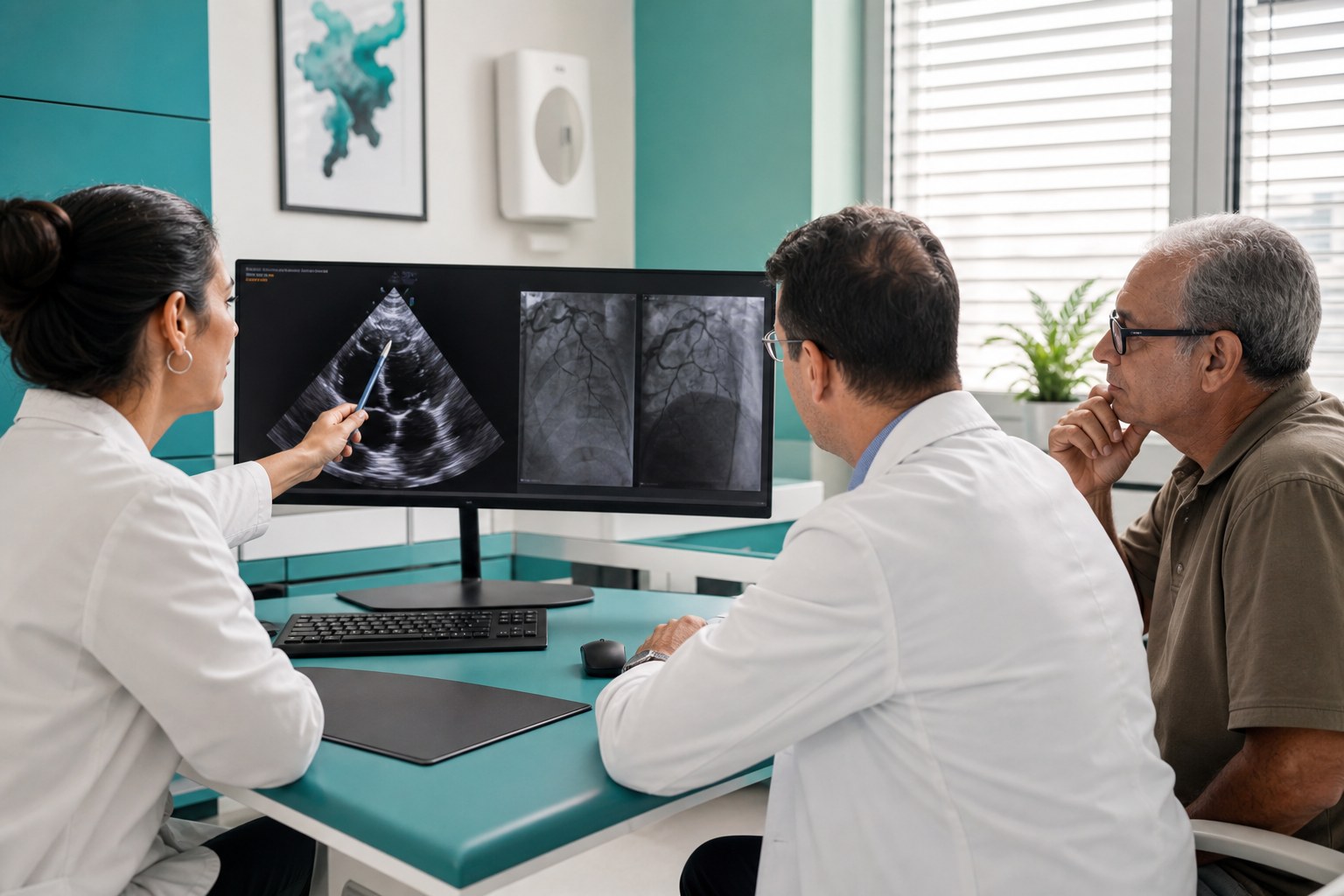
What decides a cardiology file is how measurable the records are: values, dates and reports rather than labels. The value of a remote cardiology assessment depends on how measurable the submitted records are. "Heart failure" on its own gives no direction; what matters are defined, numerical data such as left ventricular ejection fraction, the degree of valve stenosis or regurgitation, the type and frequency of any arrhythmia, and coronary anatomy as demonstrated by angiography.
The file should therefore contain the full text of the echocardiography report, angiography images and report where available, ECG traces, Holter results, exercise testing or myocardial perfusion studies, current blood tests and a list of medicines with their doses. For patients with a pacemaker or ICD, the device card and the most recent check report are also required.
The effect of symptoms on daily life is clinical data in its own right. How many flights of stairs you can climb, how far you can walk on level ground before stopping, whether you wake at night breathless and whether your legs swell all determine functional class and play a direct part in deciding fitness to travel.
Flight safety is a separate heading in cardiology. A recent heart attack, unstable angina, uncontrolled arrhythmia, advanced heart failure or the early period after a new procedure can make a long flight risky. That assessment should be made by the cardiologist who follows the patient, before travel is planned.