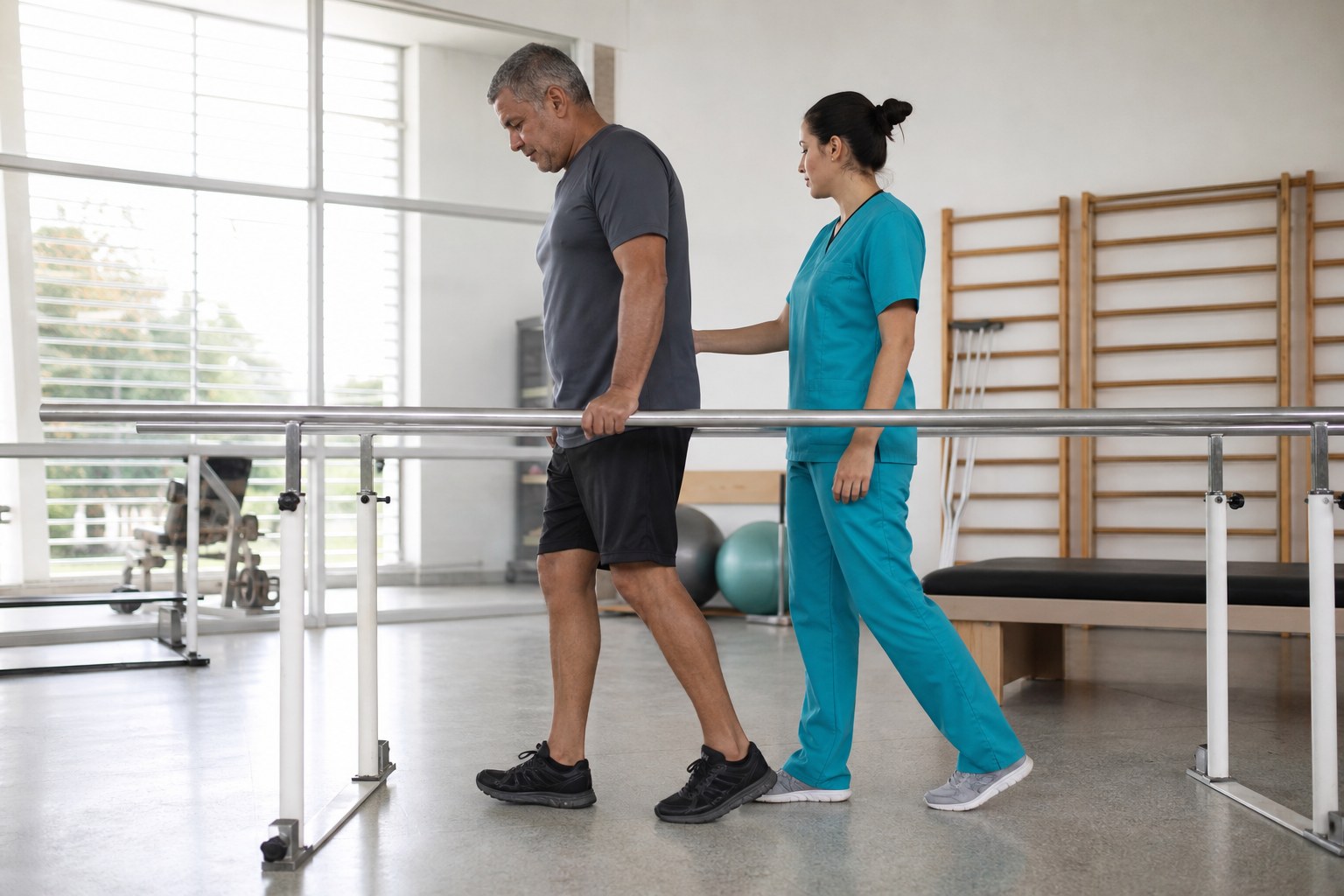
In orthopaedics the outcome is the whole programme; the operation is one step inside it. In orthopaedic procedures, the function a patient regains depends as much on preparation beforehand and rehabilitation afterwards as on the operation itself. In knee or hip replacement, shoulder surgery or spinal procedures, success is not measured by improvement on imaging but by whether the patient can climb stairs, sleep without pain and return to daily activity. The plan must therefore be built around functional goals from day one.
The file needs to be measurable. Which movement provokes pain and how severely; joint range of motion measured in degrees; walking distance; whether a stick or walker is used; and how function has changed over the last six months are as decisive as the imaging. For X-ray, MRI or CT, the raw images should be sent where possible, not only the report.
Where rehabilitation will take place is the most critical detail of the travel decision. Many orthopaedic procedures require weeks of intensive rehabilitation. If part of that will be completed in Cuba, the length of stay must reflect it; if the remainder will continue at home, the centre and programme should be identified before travel. Interrupted rehabilitation can undo the result of a well-performed operation.
Comorbidities have a direct effect on outcome in orthopaedics. Diabetes, obesity, smoking, osteoporosis and anticoagulant therapy all influence wound healing, infection risk and bone union. These must appear explicitly in the file so that a realistic conversation about risk is possible.