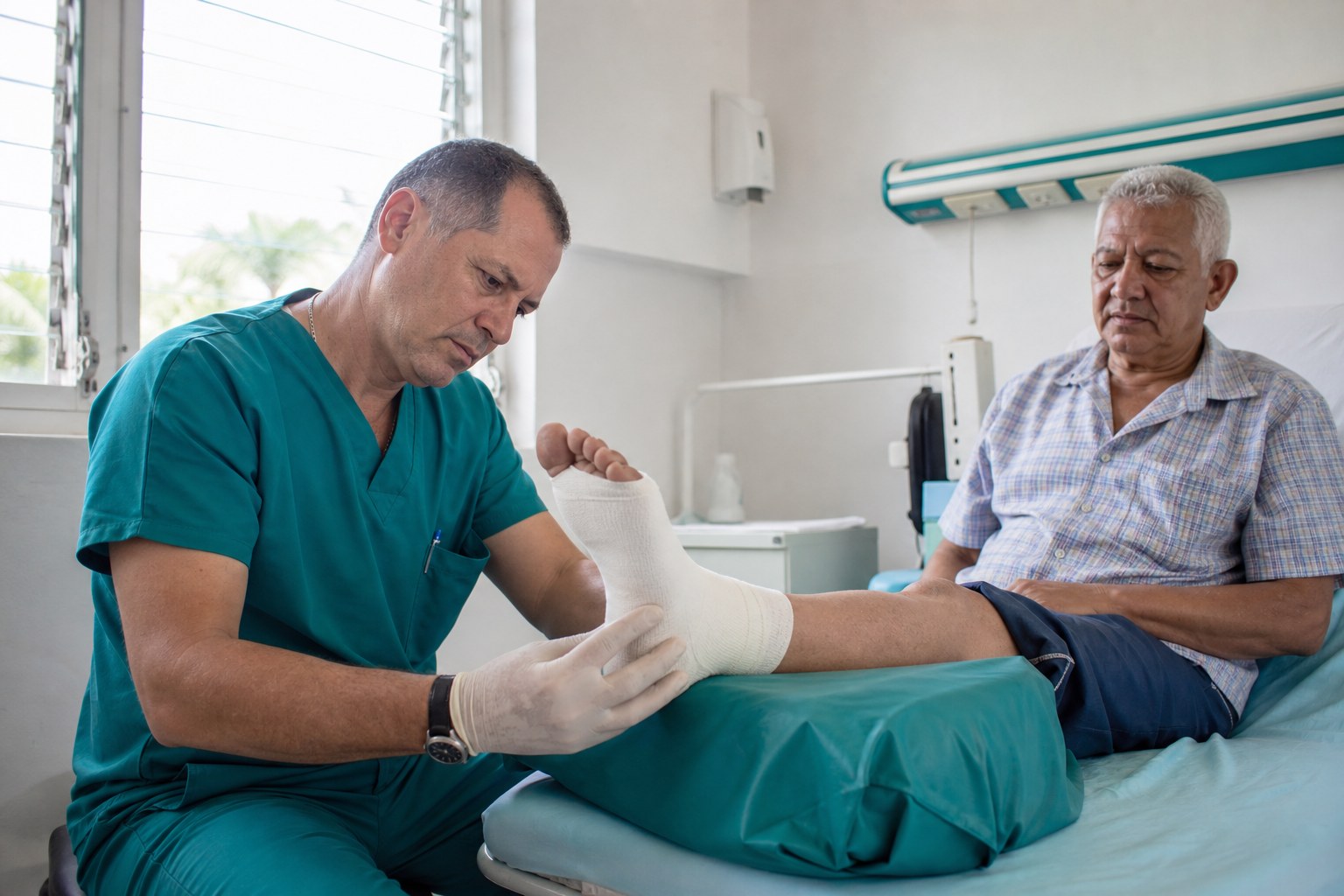
Heberprot-P is a preparation of recombinant human epidermal growth factor applied into the wound bed. Heberprot-P contains recombinant human epidermal growth factor (rhEGF). Epidermal growth factor is a signalling protein the body normally uses in tissue repair: it stimulates cell proliferation, new vessel formation and the development of granulation tissue. In chronic diabetic foot ulcers this natural repair signal is insufficient, which is why a wound can remain open for months. The aim of treatment is to deliver the growth factor directly into the wound bed and restart a process that has stalled.
It is not a cream or a dressing. Treatment is given as intralesional injections into the base and edges of the wound, typically three times a week, under sterile conditions and by trained staff. Duration depends on response; published protocols stop when granulation tissue covers roughly 50 to 75 per cent of the wound surface, and in most patients total treatment does not exceed eight weeks.
Wound preparation beforehand is mandatory: removal of dead tissue (debridement), treatment of any infection, investigation for osteomyelitis, and assessment of circulation in the leg. In a foot with critically impaired blood flow, no wound treatment delivers the expected result until the vessels are addressed, so vascular assessment usually comes first.
The most frequently reported side effects are pain and burning at the injection site, shivering, fever, nausea and dizziness; these are usually transient and managed during administration. Throughout treatment, glycaemic control, offloading the wound with suitable footwear or a cast, and regular dressing changes remain equally important. Heberprot-P is added to that basic care, not substituted for it.