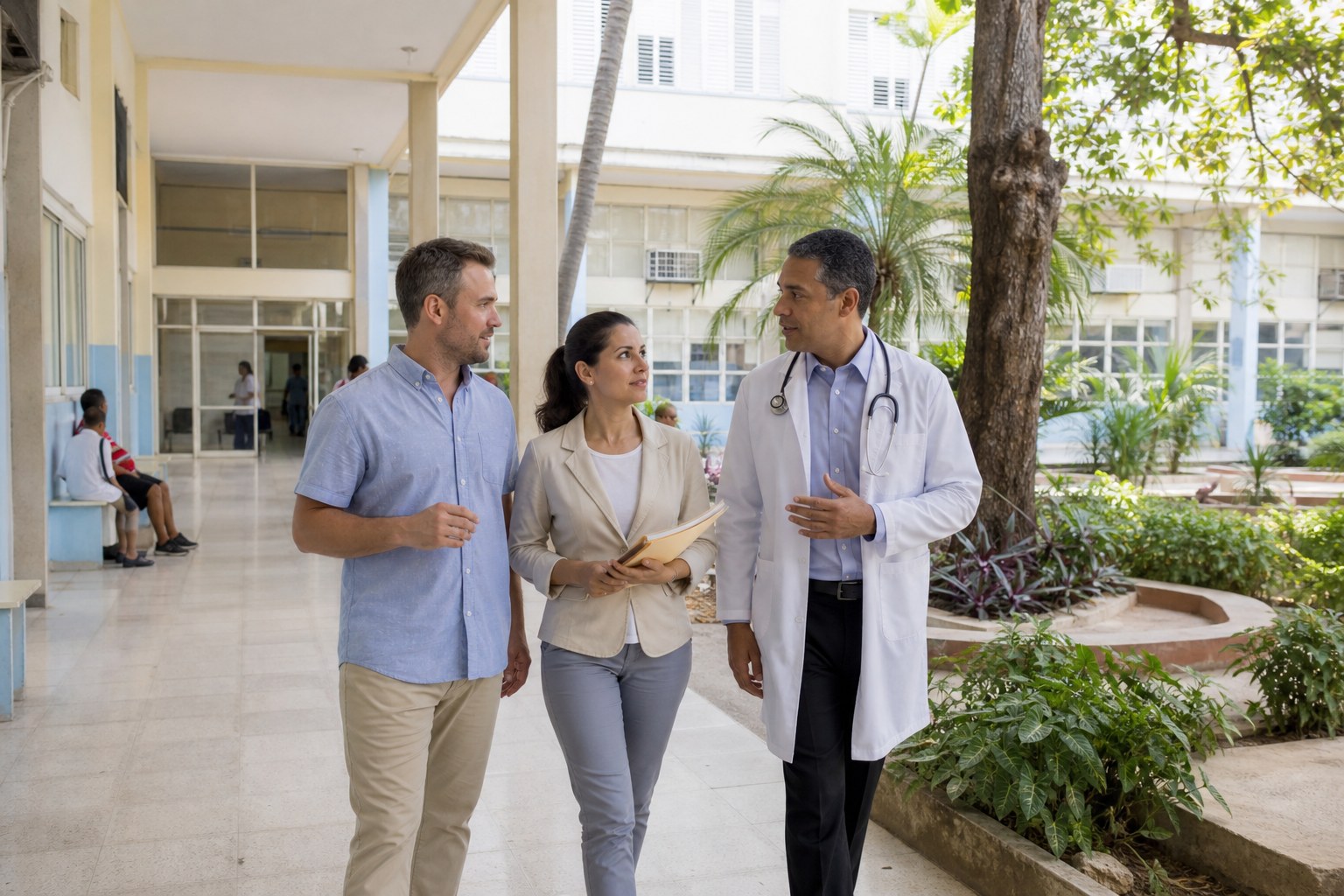
The Cuban health system is best understood through verifiable facts rather than reputation. Cuba has a high number of physicians per head of population and has invested for many years in preventive medicine and biotechnology. Several products developed there — Heberprot-P for diabetic foot ulcers, CIMAvax-EGF and Vaxira studied in lung cancer, HeberFERON for skin tumours, Melagenina Plus for vitiligo, Coriodermina for psoriasis — are what has drawn international attention to the field.
The existence of these products is not in itself a promise of treatment. Each differs in level of evidence, licensing status and the patient group it suits. Some have been used in defined indications for years; others remain investigational or are supported by a small number of studies. A responsible assessment asks, separately for each option, what evidence supports it for this patient's diagnosis.
A second realistic topic is how services actually work. Services for international patients in Cuba are delivered in particular centres, and appointments, medicine supply and laboratory processes can differ from what patients are used to at home. Language, correspondence conducted in Spanish and limits on communications infrastructure are practical matters to plan for from the start.
Comparing on price alone is misleading. A sound comparison considers the level of evidence for the treatment, the experience of the centre, the total cost (flights, accommodation, companion, the possibility of an extended stay), what happens if a complication occurs, and who will provide follow-up after returning home. A decision taken before those five points are clear tends to become expensive later.